Outdoor education: A rite of passage
March 24, 2026
Outdoor education is a rite of passage for children. Whether it’s a traditional school camp or more specialised program, learning life skills in the great outdoors helps young people foster confidence, resilience and connection – we see these benefits week after week at Cottage by the Sea.
Unfortunately, according to a recent article in the Herald Sun, there are severe concerns for camps under the current education enterprise agreement. “Schools are cancelling camps at increasing rates as they feel the squeeze from rising costs and changes to teacher payment requirements,” writes education reporter Rebecca Borg.
The effects are also felt on our end. The Australian Camps Association (ACA) Census and Economic Contribution Report found the largest issues impacting camp providers on a national level include rising insurance costs and supporting young people with mental health conditions. We need to protect this rite of passage for young people.
Excitingly, a new article through our research partnership with Deakin University has just been published on this very topic: Turning Points for Children Experiencing Vulnerabilities: The Role of Outdoor Adventure (2026). The paper confirms that adventure provides an opportunity for personal growth in young people, especially those experiencing vulnerability.
As the article highlights: “Using a qualitative case study approach and drawing on data generated through interviews with school leaders, teachers, parents, CBTS staff, and past and recent program participants, the paper identifies three themes as turning points: trust, risk-taking and hope. These themes illustrate how outdoor adventure experiences provide children and young people experiencing vulnerability with opportunities to rebuild trust, navigate challenges and envision a more hopeful future.”
The paper identifies three themes as turning points: trust, risk-taking and hope. These themes illustrate how outdoor adventure experiences provide children and young people experiencing vulnerability with opportunities to rebuild trust, navigate challenges and envision a more hopeful future.
L. Paatsch et al.
As continued in the paper, “Adventurous experiences function as potential turning points by fostering resilience, strengthening social connections and equipping children with the confidence and aspirations needed to reimagine their futures.”
Taking the leap
The Cottage team is lucky to witness remarkable transformations in children every week, and here is an example from a recent Take a Break program with children from a small town in rural Victoria.
Being from the country, the simple significance of spending time in and by the sea was a highlight for all – and a new experience for many. But the unknown can also be nerve-wracking; some children meet life’s mysteries with excitement, others with fear.
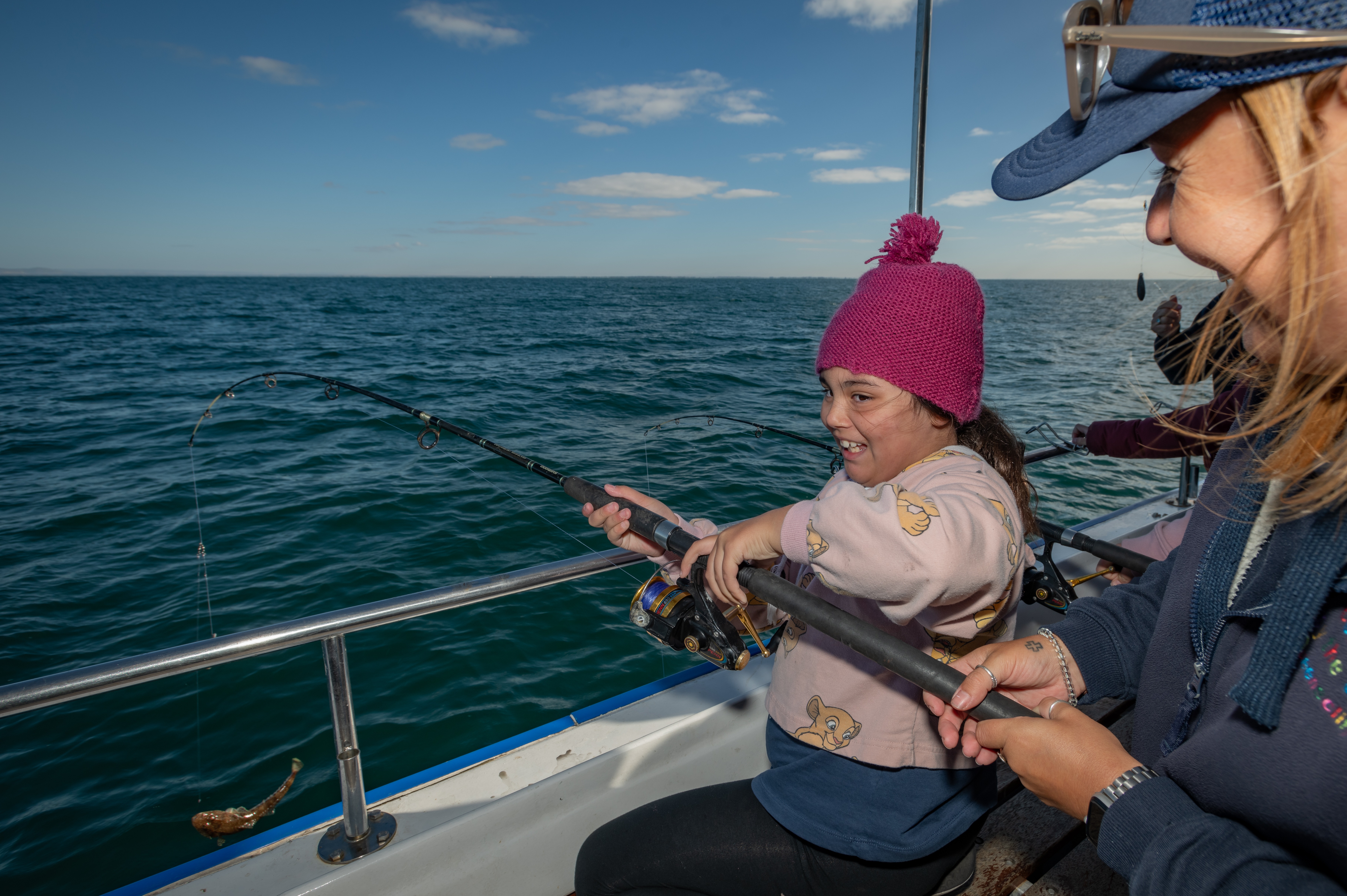
One of this week’s activities was going on a fishing charter. While many of the participants couldn’t wait to cast a line, a few children had trepidation – fear of the unknown is something our experienced team are well-versed at supporting children through.
Initially, one young boy felt too scared to go on the boat. But by working through the three aforementioned themes used as turning points from our research with Deakin – trust, risk-tasking and hope – this participant took the leap and discovered a whole new world of possibility on the other side.
It didn’t mean he wasn’t scared, but he had trust and hope that the risk was worth taking – and it was. This participant later shared with our team: "I was so scared on the boat, but I am so proud of myself for having a go."
On the last morning of their stay at Cottage, one of the visiting teachers couldn’t wipe the smile off his face. “We can’t teach the skills they learned at Cottage in a classroom. I’ve seen students challenge themselves, build stronger relationships, develop resilience and have so much fun,” he shared.
When children are provided with opportunities for growth in a safe and supportive environment, they can experience remarkable transformation that we know outlasts the duration of their program – equipping them with the self-belief that helps bolster them through life’s inevitable challenges.
We can’t teach the skills they learned at Cottage in a classroom. I’ve seen students challenge themselves, build stronger relationships, develop resilience and have so much fun.
Visiting teacher
Photos by Donna Squire / Deakin University
Winston Churchill famously said, “We make a living by what we get, but we make a life by what we give.” As an independent children’s charity that receives no government funding, we rely on the generosity of our supporters to give young people these life-changing opportunities for personal growth.
A turning point can be a powerful juncture in a child’s life – offering a new path forward that may have never been considered nor possible. Thank you for valuing the importance of the outdoors and for helping us continue to facilitate this life-changing work. As Thomas Berry said, “Teaching children about the natural world should be treated as one of the most important events in their lives.”
Teaching children about the natural world should be treated as one of the most important events in their lives.
Thomas Berry